Winter Jams with Carrots and Beets
مربى الجزر ومربى الشوندر
Mrabbat Jizar, Mrabbat Shuwandar
Charming jams, like the glowing embers of a brazier on a cold wintry day.
 |
| Beetroot Jam |
 |
| Carrot Jam |
Both vegetables are winter crops in Iraq, and people use them in salads to give them a vibrant color to make up for the absence of tomatoes (summer vegetable). We enjoy beets boiled as a snack, and the resulting liquid is sweetened with some sugar, and with a squeeze of lemon, it turns into a refreshing delicious drink, we pickle it, and made into jam.
As for carrot, we munch on it as a snack food, dice it along with lamb and turn it into a spicy flavorful rice dish. We turn it into golden jam, and a delicious sweet called halawat jizar (حلاوة جزر), home-made or purchased from the confectioners.
 |
| Buying carrot halwa from the market-place |
A Bit of History:
It looks like it was on the land of ancient Mesopotamia that the first beet stew/soup (known as borscht in Europe) was cooked, as recorded in one of the three excavated Babylonian recipes, written around 1700 BC. It is quite possible that the Iraqi Jews' modern custom of cooking stews with beets has its roots deep down into the Babylonian times.
This beet dish is one of the 25 stew recipes inscribed in the cuneiform tablet above. The recipe is called "Tuh'u-beets," and it goes thus:
"Leg of mutton. Meat is used. Prepare water; add fat. Peel the vegetables. Add salt, beer, onion, arugula, coriander, samidu (?), cumin, and beets. Assemble all ingredients in the cooking vessel and mash leeks and garlic. After cooking, sprinkle the resulting stew with coriander and raw suhutinnu (?)"
 |
| The Babylonian cuneiform tablet with stew recipes (1700 BC). Courtesy of Yale Babylonian Collection |
"Leg of mutton. Meat is used. Prepare water; add fat. Peel the vegetables. Add salt, beer, onion, arugula, coriander, samidu (?), cumin, and beets. Assemble all ingredients in the cooking vessel and mash leeks and garlic. After cooking, sprinkle the resulting stew with coriander and raw suhutinnu (?)"
The kind of beets used in such an ancient recipe should not be different from the beets we use today, even in name. We read in Dictionary of Assyrian Botany (by Campbell Thompson, 1948) that in the ancient Mesopotamian region it was called ‘shumundar,’ it was as red as blood, and has a spinning-top shape (pp. 49, 51).
When we come to the medieval era, although the extant Arabic cookbooks do not have any recipes with beets, only turnips, their books on botany and horticulture do make mention of it, as shamandar (شمندر), sometimes occurring as jughandar (جغندر) and jukandar (جكندر), and recipes are given for how to pickle it. It is my guess that the intense color of the beets discouraged serving it in dishes, which were more often than not served as communal meals handled with the fingers. The stains on clothes would have been too tough to wash off, indeed.
As for carrots, while I could bot find any references to it in the ancient Mesopotamian records, there is ample evidence that it was a popular root-vegetable in the medieval Arabo-Islamic world, including Baghdad. Of the cultivated carrots, there was mention of red and orange carrots -- juicy, tender, and delicious, which poets compared to carnelian, rubies, flames of fire, coral reeds, and gold. The yellow carrot was described as being thicker and denser in texture than the red-orange variety; and white carrot must have been parsnips, described as aromatic, deliciously sharp in taste, with a pleasant crunch. Carrots were eaten raw and cooked.
Many recipes were preserved in the extant medieval Arabic cookbooks. Al-Warraq’s 10th-century Baghdadi cookbook, for instance, gives recipes for cold carrot dishes, called salayiq (صلايق); condensed puddings of khabees (خبيص); jams murabba (مربّى), and drinks sharab (شراب), which were believed to invigorate coitus. In fact, both beets and carrots were thought of as aphrodisiac foods.

Nowadays, both roots are highly valued as powerhouses of nutrients, and exploring their culinary possibilities is well worth it.
For inspiration, visit World Carrot Museum and Love Beetroot , and of course the following jams. When we come to the medieval era, although the extant Arabic cookbooks do not have any recipes with beets, only turnips, their books on botany and horticulture do make mention of it, as shamandar (شمندر), sometimes occurring as jughandar (جغندر) and jukandar (جكندر), and recipes are given for how to pickle it. It is my guess that the intense color of the beets discouraged serving it in dishes, which were more often than not served as communal meals handled with the fingers. The stains on clothes would have been too tough to wash off, indeed.
 |
| Illustration of a woman harvesting beets. From the late 1300s Tacuinum Sanitatis, a medieval European health handbook based on 11th-century ِArabic book Taqweem al-Sihha تقويم الصحة (Maintenance of Health) by the famous Christian physician and native of Baghdad Ibn Butlan (أبن بطلان) |
As for carrots, while I could bot find any references to it in the ancient Mesopotamian records, there is ample evidence that it was a popular root-vegetable in the medieval Arabo-Islamic world, including Baghdad. Of the cultivated carrots, there was mention of red and orange carrots -- juicy, tender, and delicious, which poets compared to carnelian, rubies, flames of fire, coral reeds, and gold. The yellow carrot was described as being thicker and denser in texture than the red-orange variety; and white carrot must have been parsnips, described as aromatic, deliciously sharp in taste, with a pleasant crunch. Carrots were eaten raw and cooked.
 |
| Illustration of a farmer harvesting parsnips (below: harvesting carrots). From the late 1300s Tacuinum Sanitatis, a medieval European health handbook based on 11th-century Arabic book Taqweem al-Sihha تقويم الصحة (Maintenance of Health) by the famous Christian physician and native of Baghdad Ibn Butlan (أبن بطلان) |
Many recipes were preserved in the extant medieval Arabic cookbooks. Al-Warraq’s 10th-century Baghdadi cookbook, for instance, gives recipes for cold carrot dishes, called salayiq (صلايق); condensed puddings of khabees (خبيص); jams murabba (مربّى), and drinks sharab (شراب), which were believed to invigorate coitus. In fact, both beets and carrots were thought of as aphrodisiac foods.
Nowadays, both roots are highly valued as powerhouses of nutrients, and exploring their culinary possibilities is well worth it.
Here is how to make them:
The same method and amounts can work for both, except for the flavorings. I like to use cardamon and a bit of rose water for the carrot jam, and cardamom and a bit of vanilla for the beet jam, but feel free to experiment to your liking..jpg)
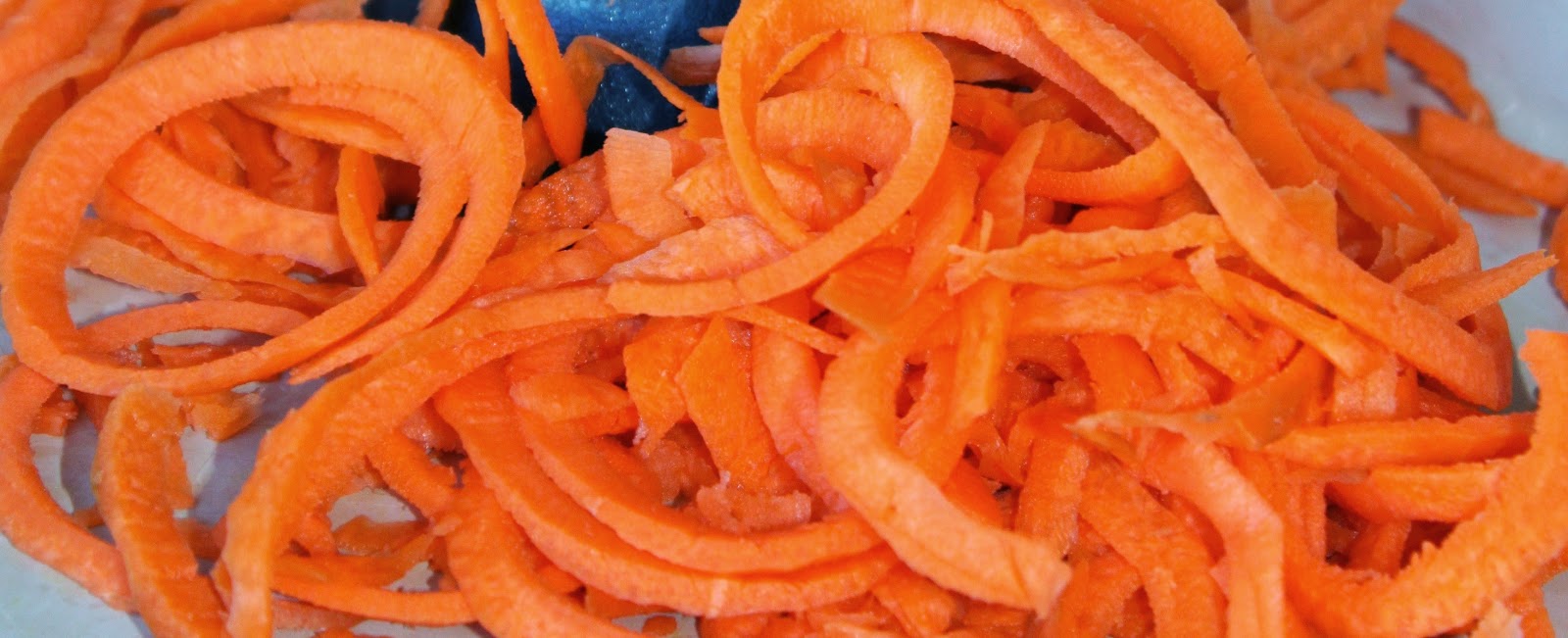
For the carrot jam, I used my fun new kitchen gadget the spiral vegetable slicer. Usually it does a very good job on slicing veggies into enticing strands.Previously I used to slice the carrot thinly or shred it in the food processor, but the carrot strands I got with this slicer were really beautiful.
1 pound carrots or beets (amount weighed after peeling and cutting or slicing)
1½ cups granulated sugar
1/2 cup water
2 tablespoons honey
2 tablespoons honey
3 whole pods cardamom
1/4 cup walnut halves, optional
1 tablespoon lemon juice
1 teaspoon rose water
1 teaspoon vanilla
(See my comment above on flavorings)
1. In a medium heavy pot, layer carrots or beets with sugar. Add water, cover the pot, and set aside,
overnight. The sugar will melt and the vegetables will release a lot of their juices.
To test for doneness, put a drop of the syrup in a small plate. If the drop keeps its domed shape and does not go flat, the jam is done.
Let the jam cool off completely, and keep in the refrigerator. Lovely with butter or cream cheese, or sour cream. You can even enjoy it by itself as dessert. The beets and the carrots will have a scrumptiously chewy bite to them.


.jpg)
.jpg)